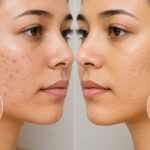
Dermaplaning is a gentle, non-invasive treatment that removes dead skin cells and fine facial hair to reveal smoother, brighter skin. It also improves skincare absorption and creates a flawless base for makeup with little to no downtime.


If you’ve started diving deep into skincare, exploring various treatments and procedures online, you’ve likely come across the term ‘dermaplaning,’ a skincare treatment where a dermatologist or aesthetician gently exfoliates your face with a special instrument. It sounds harsher, but the treatment is quite gentle.
Remarkably, dermaplaning is an impressive option for those who want to achieve soft, smooth skin, as it removes hair and reduces the appearance of acne scars effectively. However, if the concept feels unfamiliar, it’s worth learning about the process before booking an appointment. So, let’s explore the concept of what dermaplaning is and how it can benefit your skin.
What is Dermaplaning?
Dermaplaning is a cosmetic procedure for your skin where the uppermost layers of your skin are scraped off with a special instrument by a dermatologist or cosmetologist. Dermaplaning helps to reduce visible acne scars or other skin marks by revealing newer, undamaged skin.
Dermaplaning removes the fine facial hair, which makes your skin look younger. Some people also get dermaplaning for facial hair removal, which is a temporary fix because your hair will grow back.
Which Skin Type is Suitable for HydraFacial?
HydraFacial is suitable for every skin type. Even sensitive skin can withstand the treatment. This treatment can be customized according to your skin’s needs and requirements. Your skin care expert will choose the right serums and treatments to help you get the desired results.
Pros:
- Softer and smoother skin
- Ease hyperpigmentation
- Peach-fuzz removal
- Brighter, more youthful skin tone
Cons:
- Risk of scarring if done incorrectly
- Potential irritation
- Can’t be done with excessive breakouts
- Risk of inflammation on sensitive skin
Is Dermaplaning just shaving?
Dermaplaning isn’t the same as shaving. There are two major differences between shaving and dermaplaning. The shaving process focuses on the removal of hair, whereas dermaplaning is about removing fine facial hair and exfoliating your skin.
The main difference is in the technique and tools used in both processes. There is a mechanical difference between the tools you use, your skin, and your hair. Basically, shaving razors present blades against your skin at a slight angle, typically between 20° and 30°. The function of a razor blade is to glide along your skin and slice through hair as close as possible. Dermaplaning blades are presented at your skin with a much wider angle, about 45°, allowing the dermaplaning blade to wipe away dead skin cells. Dermaplanner, a tool used in dermaplaning, forces a 45° angle by design and by the material surrounding the blade edge.
What Happens During Dermaplaning?
Dermaplaning lasts about 30 minutes to one hour, depending on the size of the area that needs treatment. Generally, this process doesn’t require anesthesia; some dermatologists might put a numbing spray on your face about half an hour before the procedure. Dermaplaning isn’t painful.
A dermatologist uses a special instrument called a Dermatome to remove hair and dead skin cells. The tool looks like an electric razor. It consists of a small blade that moves back and forth across your skin. The blade doesn’t make cuts in your skin, but gently shaves off the uppermost layers of skin. Thereafter, they may apply a soothing gel or ointment to your skin to reduce swelling, redness, and irritation.
Recovery Process of Dermaplaning
Recovery varies from one person to another; it may take weeks and months after dermaplaning, but you can expect:
- After 1 Week: Swelling and redness should decrease. You may notice open pores or small whiteheads on your skin, which usually fade out with the swelling. Shaving the treated area increases redness and irritation.
- After 2 Weeks: A dry patch may form over the treated area, which falls off. The skin underneath will look tight and pink; it might be itchy and irritating. You should avoid exhausting activities.
- After 4-6 Weeks: You can get back to playing sports or other activities, but avoid extended sun exposure.
- After 6-12 Weeks: Avoid sun exposure until the treated area returns to your normal skin color.
Conclusion
Dermaplaning is a cosmetic procedure where dead skin cells and tiny facial hair are scraped off with a special instrument by a dermatologist or cosmetologist. Dermaplaning isn’t a painful process. It differs from normal shaving, as we discussed in the article. Dermaplaning is suitable for all skin types. Better results can be achieved with a disciplined aftercare process.
If you are looking for professional dermaplaning services, at Emmrey Medical Aesthetics, we offer a wider range of skin treatments, including dermaplaning. Our experts have vast experience and are well-equipped, which helps you achieve the soft skin you desire. We offer other facial treatments, which include our personalized signature peel, chemical peels, and advanced peels. Book your appointment today.
Our Clinic is a European Quality Standard
On your first visit to the clinic, you will receive a consultation with a specialist.